


What Is a Material Hoist and Why Do Sites Need One?
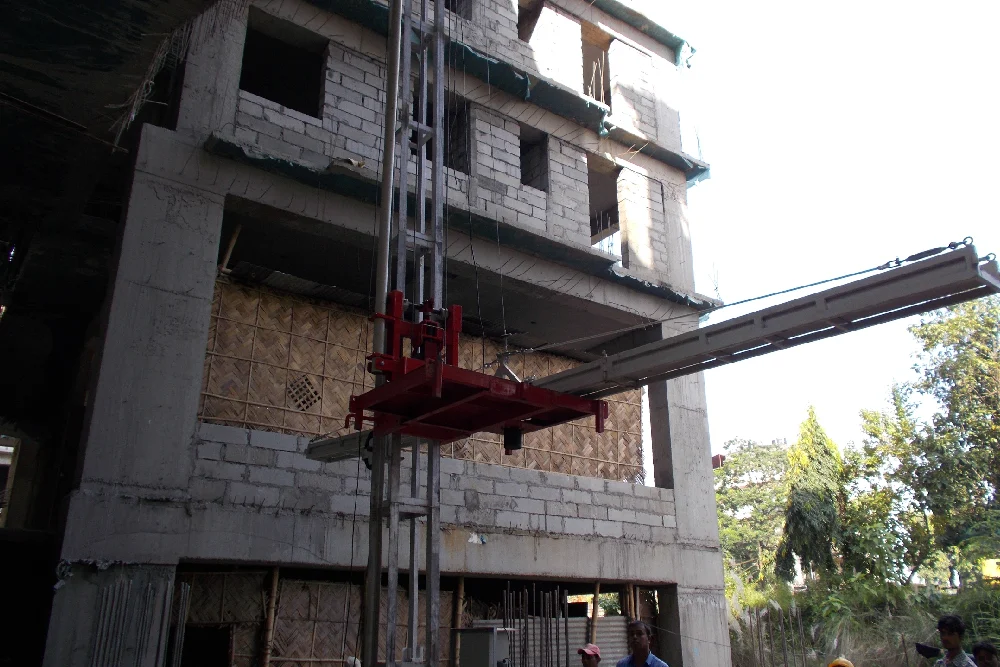
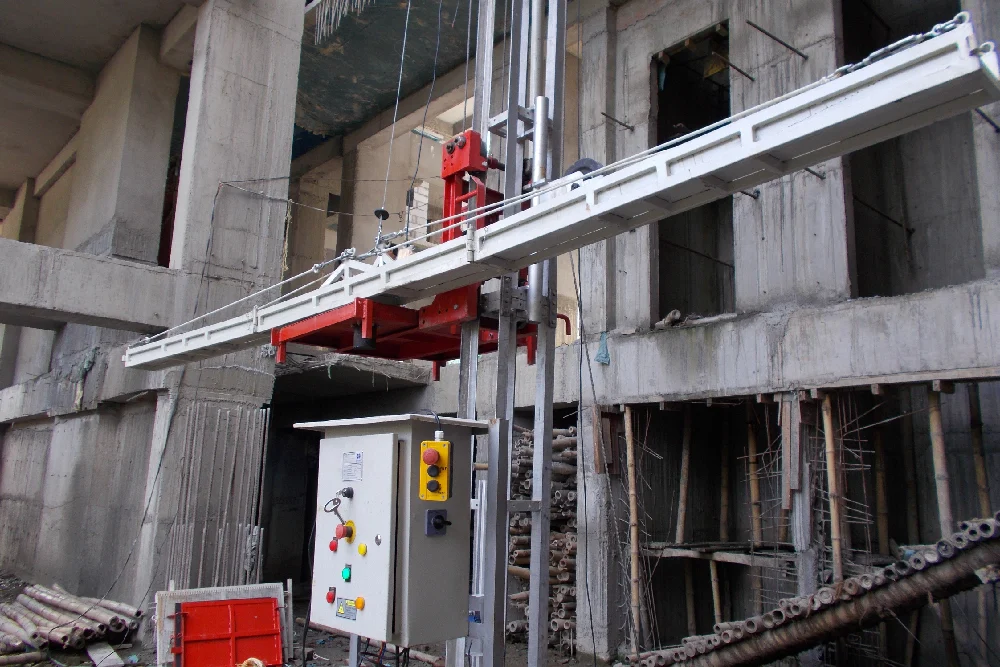
A material hoist is a cage that travels vertically along a steel mast attached to the structure. Workers load it at ground level, press a button and it carries the load to the floor you need. It’s one of the simplest ways to move heavy items to height, and for a construction material hoist, simple is exactly what you want.
Jaypee India Limited also describes this hoist as a single machine for handling both man and material. Contractors who don’t want to buy two separate machines will find that useful.
Where It Pays Off
- Multi-storey residential and commercial buildings
- Industrial plants, such as power, steel and cement plants
- Bridges and pylons
- Warehouses and tall storage structures
Basically, anywhere the building grows faster than the stairs.
Key Features of the Jaypee Material Lifting Hoist
- Low Running Cost
The hoist uses a geared motor that draws little power. Over months of daily use, lower energy consumption shows up clearly on the electricity bill. The hoist also has a self-erecting mechanism, so the crew can put it up and extend it without calling for extra equipment.
- Safety Built In
A material hoist is only useful if the crew trusts it. Jaypee fits each model with:
- Electromagnetic brake motor
- Centrifugal freefall arrester
- Top and bottom stopper limit switches
- Travel limit switch
- Electrical interlocking on the cage door
- Overload safety
The overload limiter deserves a mention. Many site accidents start with someone adding “just one more bundle.” The limiter stops the cage from moving when it’s overloaded, which removes that human error.
- Tough Materials
The cage, mast and wall ties are electro galvanised, which protects against rust during monsoon months and in dusty conditions. Jaypee builds these hoists with quality raw materials to global quality standards.
Material Hoist Models and Technical Data
| Feature | JMH 100 | JMH 150 | JMH 200 |
| Load capacity | 700 kg | 1000 kg | 2000 kg |
| Maximum height | 150 m | 300 m | 450 m |
| Cage size (L x B x H) | 1600 x 1000 x 2000 mm | 1800 x 1000 x 2100 mm | 2000 x 1200 x 2000 mm |
| Lifting speed | 36 m/min | 36 m/min | 36 m/min |
| Travel type | Rack and pinion | Rack and pinion | Rack and pinion |
| Drive | Geared motor | Geared motor | Geared motor |
All three models share the same safety kit and the self-erecting mechanism.
Optional Attachments
Several add-ons make the hoist more useful for specific jobs:
- Concrete bucket: for lifting wet concrete to upper floors
- Horizontal rebar attachment: carries reinforcement bars up to 6 m long
- FC drive: for smoother speed control
- Floor selectors: let you send the cage to a chosen floor
The rebar attachment is especially popular on sites where long bars would otherwise need a crane.
How to Pick the Right Material Hoist
Start with the heaviest regular load. If you mostly move light materials like tiles and plaster, the JMH 100 is enough. If you carry bulky items like steel or full pallets, the JMH 150 or JMH 200 gives you the margin.
Next, check your building height. The three models reach 150 m, 300 m and 450 m, so a taller structure points to a higher model.
Finally, think about the load itself. Long rebar and wet concrete need the attachments above, so mention them when you request a quote.
Note: specifications are subject to change as per company policy, so confirm final details with the sales team before ordering. We can customise our products according to your project’s requirements.
Why Buy from Jaypee, a Material Hoist Manufacturer You Can Call
We bring in the best innovations in construction equipment manufacturing. At all levels, we check everything, like verifying the quality of raw materials to maintaining the standard of the final product before rolling out of the factory. Jaypee is a leading Material Hoist Manufacturer in India. Its engineers listen to site requirements and build different kinds of hoists to match them, instead of pushing one design on every job. The factory is in Howrah, West Bengal, with offices in Delhi and Mumbai, so support is never far away.
Spares and service are available through Jaypee’s own network. When a hoist is carrying material to the fortieth floor, you don’t want a long wait for a replacement part.
To get a quote, call the 24×7 hotline on +91 90512 34444 or email solutions@jaypee.in.
FAQs
- What load can a Jaypee material hoist carry?
Capacity depends on the model: 700 kg for the JMH 100, 1000 kg for the JMH 150 and 2000 kg for the JMH 200. - How high can the hoist go?
The JMH 100 reaches 150 m, the JMH 150 reaches 300 m and the JMH 200 reaches 450 m. - How fast does the cage move?
All three models lift at 36 metres per minute. - Can the hoist carry concrete and long rebar?
Yes, with optional attachments. A concrete bucket and a horizontal rebar attachment for bars up to 6 m long are both available. - What safety devices are fitted?
Each hoist has an electromagnetic brake motor, a centrifugal freefall arrester, limit switches, an electrical door interlock and overload safety.


Reviews
There are no reviews yet.